Double Diwali Delight: PM Modi’s Next-Gen GST Reforms Promise Relief to Millions by October
next-generation GST reforms
1. Introduction: A “Double Diwali” Promise
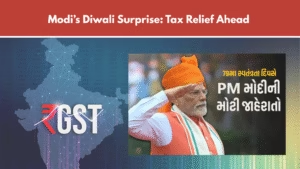
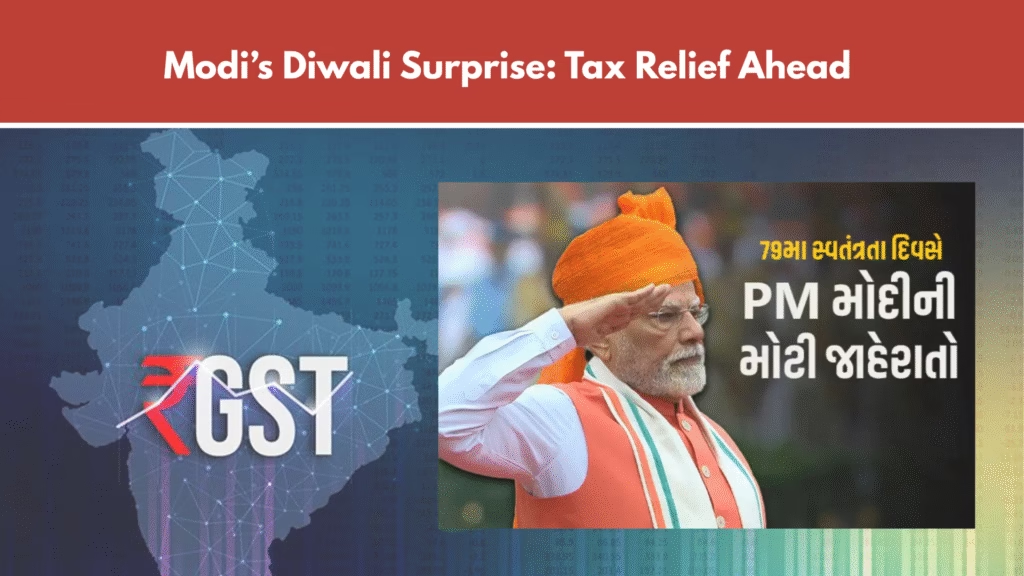
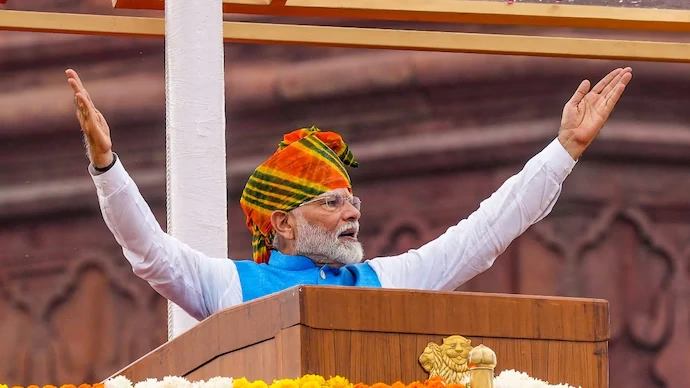
This Independence Day, August 15, 2025, Prime Minister Narendra Modi stood atop the historic Red Fort and unveiled a sweeping economic gesture — a “Double Diwali” promise for every Indian. He announced that by Diwali, expected in October, the government will introduce next-generation GST reforms aimed at dramatically reducing the tax burden, especially on items essential to everyday life
These reforms are not just about lowering rates, but entail a comprehensive overhaul of India’s goods and services taxation, following eight years since its inception in 2017 .
2. Context & Background: Why Now?
GST: A Revolution with Room to Improve
India’s GST, introduced on July 1, 2017, replaced a labyrinth of indirect taxes, easing compliance and unifying markets. Yet, over time, it birthed criticism for its multiple tax slabs – 5%, 12%, 18%, and 28% – and complexity
Eight Years Later: Time for a Refresh
With eight years into this structure, PM Modi asserted it’s time to “review” the system. A high-powered committee has already been formed, and consultations with states have taken place to lay the groundwork for reform
3. What Did PM Modi Say? The “Double Diwali” Declaration
In his address marking India’s 79th Independence Day, Modi exclaimed:
“This Diwali, I am going to make it a double Diwali for you… we are bringing next-generation GST reforms. This will reduce the tax burden across the country.”
He emphasized that these reforms will focus on daily-use or essential items, rendering them more affordable for ordinary households
The goal: make this Diwali doubly joyous by combining festivities with fiscal relief.

4. Details: How Will GST Slabs Change?
Though final contours remain under review, reports indicate:
- Potential elimination of the 12% slab, with items reallocated to 5% or 18% slabs
- A possible mass shift of everyday goods—such as packaged food, apparel, hotel stays—from 12% to 5%, alleviating costs for consumers
- Projections by Citi analysts estimate that this move could mean a revenue loss of ₹500 billion (~0.15% of GDP), but also deliver a 0.6–0.7% GDP stimulus in the 2025–26 fiscal year
5. Economic Implications and Benefits – next-generation GST reforms
For Consumers
Tax relief on everyday goods means visible price reductions, making life more affordable. Families could experience decreased expense on packaged foods, clothing, hotel stays, and other essentials
For MSMEs
Simpler taxation and lower rates can lower compliance costs, fuel expansion, and boost competitiveness for small and medium businesses
For the Economy
Stimulating consumption is critical amid global uncertainties. These reforms could trigger a consumption-led growth push, enhancing macroeconomic momentum. Citi estimates point toward significant GDP stimulus
6. Timeline: From Independence Day to Diwali
Launch Date: October 2025 (Diwali)
PM Modi reaffirmed that the reforms will be implemented by Diwali, widely expected in October 2025
Review Process Underway
The process has already seen the formation of a high-powered committee and state-level consultations. The government is currently finalizing the structure and slab adjustments
7. Full Landscape of the Independence Day 2025 Announcements
Beyond GST reforms, PM Modi made multiple landmark announcements in his longest-ever Independence Day speech of 103 minutes
- “Double Diwali” with next-gen GST reforms – tax cuts, slab rationalization
- First Made-in-India semiconductor chip to hit markets by year-end
- Pradhan Mantri Viksit Bharat Rojgar Yojana: ₹1 lakh crore scheme giving ₹15,000 to first-time private-sector jobseekers, targeting ~3.5 crore youth
- Mission Sudarshan Chakra: a futuristic defense shield to strengthen national security by 2035
- High-power Demography Mission: addressing infiltration and demographic security
- Task Force for Next-Gen Reforms: align existing laws with 21st-century needs
- Other themes: Atmanirbhar initiatives, space station planning, semiconductor push, and energy independence
8. What’s Next? Watchpoints & Public Expectations
Public Anticipation
Citizens across economic strata await price relief. MSMEs hope for lighter compliance burdens. The timeline is short — only a few months — making anticipation and uncertainty both high.
Policy Follow-Through
The Government’s high-powered committee, state consultations, and alignment with the GST Council will be critical in shaping final reforms. Monitoring official releases will be key in the coming weeks and months.
Economic Indicators
Analysts will track consumer spending, GST revenues, and inflation trends post-implementation. Early signs of consumption revival will help measure the policy’s success.
9. Conclusion: A Festive Promise with Potential
Prime Minister Modi’s “Double Diwali” pledge—envisioned through next-generation GST reforms by October 2025—is one of the most significant economic gestures to Indian citizens in recent years. By aiming to simplify GST and drastically lower tax on everyday items, the government is offering festive cheer along with tangible economic relief.
If implemented promptly and transparently, these reforms could boost consumption, empower MSMEs, and reinforce public trust in delivery of efficient governance.
As we move toward October, all eyes will stay firmly on New Delhi — to see whether this “Double Diwali” truly lights up India’s economic future.